














While chronic pain itself is not listed as a disabling condition by the Social Security Administration (SSA), it can be a basis for disability benefits if it stems from a “medically determinable impairment” (MDI). This means applicants must provide objective medical evidence of an underlying condition causing their persistent pain, such as severe arthritis, back injuries, or neurological disorders.
The SSA then evaluates the intensity and persistence of the pain and, crucially, assesses the applicant’s Residual Functional Capacity (RFC). The RFC determines what work-related activities an individual can still perform despite their pain and limitations, playing a critical role in whether benefits are approved if the pain prevents them from engaging in substantial gainful activity.
Why This Update
The SSA can change its policies, and we want to make sure we have the best information for you! As of January, 2026, chronic pain itself is not listed as a disabling condition by the Social Security Administration (SSA), but it can be a basis for disability benefits if it stems from a “medically determinable impairment” (MDI).
What Is Chronic Pain?
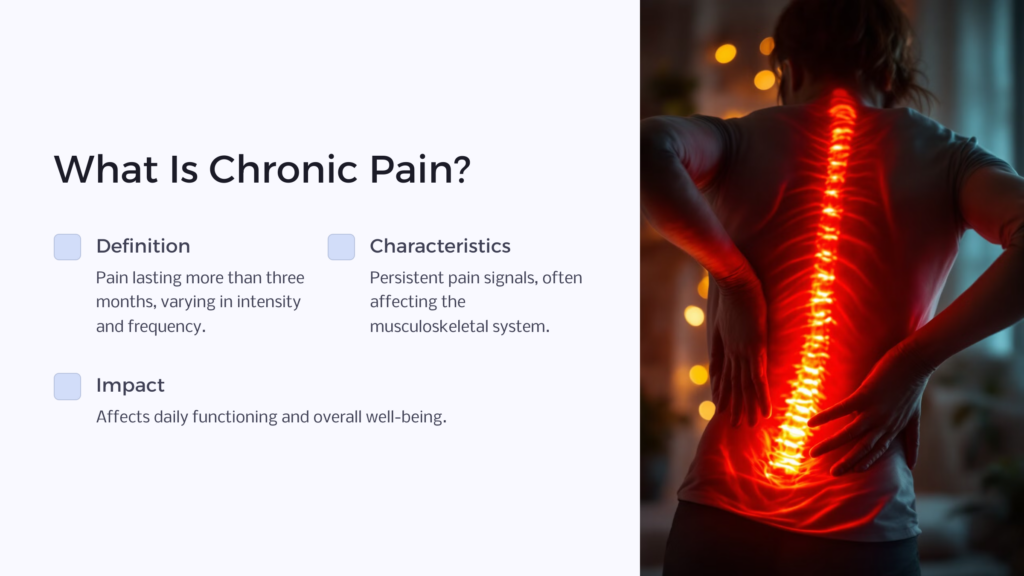
Your musculoskeletal health is an essential aspect of your overall well-being. Having well-functioning muscles, bones, and other tissues is important for efficient movement and daily functioning. Unfortunately, the musculoskeletal system is vulnerable to an array of issues, often left untreated because some people deem their symptoms insignificant.
These untreated symptoms can result in severe chronic pain, which is pain that a person feels regularly and persistently. In the medical field, a chronic pain condition is any sort of pain that lasts for more than three months. Acute pain, on the other hand, is short-term and typically results from an injury or a specific event, often resolving as the body heals, while chronic pain persists for months or longer. The sensation may come and go, be severe or mild, and can happen anytime or anywhere. The most common characteristic is that the pain signals never go away.
Chronic pain is not limited to the musculoskeletal system, but most of the issues that cause the sensation stem from parts of the system. These include joints, muscles, bones, and tendons. Chronic pain is often intertwined with psychological, social, and cultural factors, which can complicate its management and impact on daily life.
What Are the Main Causes of Chronic Pain?
Chronic pain patients experience pain that can result from a wide range of issues in the body.
- Issues in the Skeletal and Muscular Systems: Rheumatoid arthritis, herniated discs, and nerve damage can all cause a constant sensation of physical pain. Unfortunately, some of these disorders are to be expected as part of aging or poor lifestyle habits.
- Past Injury: Some patients experience pain brought about by physical trauma and accidents that didn’t heal properly, especially if medical professionals didn’t treat these injuries. Spinal cord injuries, torn rotator cuffs, and sprains are just a few examples of injuries that may cause long-term musculoskeletal pain.
- Mental Health Issues: Chronic pain can sometimes happen even without apparent injury or disease to the body. This type of pain is called psychosomatic pain, and it usually stems from stress, chronic fatigue syndrome, and mood disorders like depression and anxiety that could possibly cause chronic pain syndrome. In disability evaluations, a medically determinable mental impairment, such as somatoform pain disorder, can also be considered as a qualifying factor.
Chronic pain is not a standalone listing in the SSA’s Blue Book and is assessed based on the underlying condition, such as degenerative disc disease or arthritis. Chronic pain patients often seek care from multiple physicians and may undergo numerous treatments over time.
What Are the Most Effective Medical Treatment for Chronic Pain?
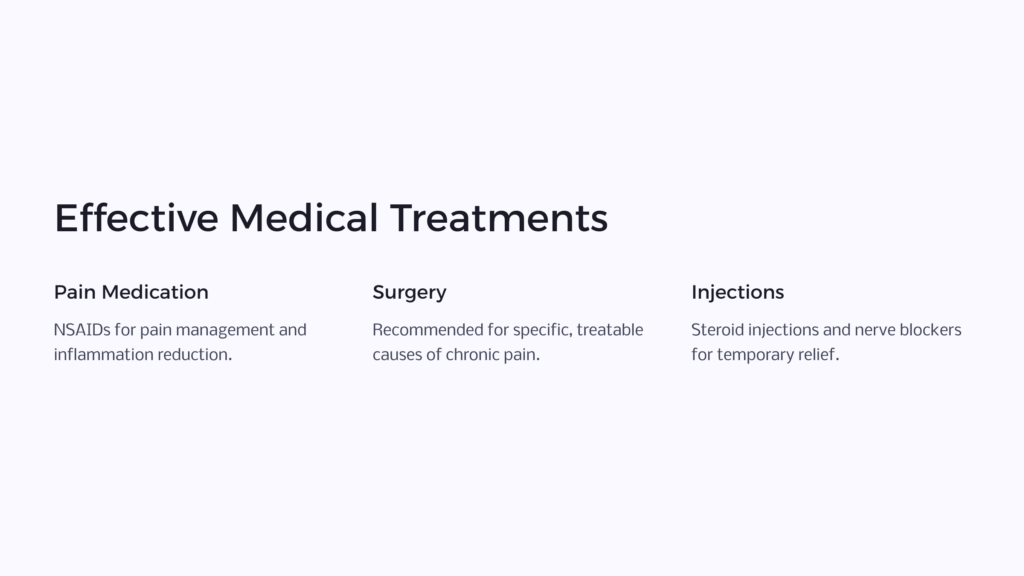
There is no one way to treat chronic pain, given how the issue stems from an array of causes. To accurately treat the problem, a physician must first identify what’s causing it. Only after the medical professional knows the root cause can they recommend the right treatment available. Unfortunately, not all root causes of chronic pain are curable.
In this case, pain management may be the next option available. It is important to document all treatments and interventions for chronic pain to support a disability claim.
Here are some of the most common and effective treatments for chronic pain.
- Pain Medication/Relievers: Nonsteroidal anti-inflammatory drugs (NSAIDs) are commonly prescribed to help manage chronic pain. These medicines also have anti-inflammatory properties that reduce swelling in problem areas, which also diminishes pain.
- Physical Therapy: Physical therapy is a key non-traditional treatment option that helps relieve pain by improving mobility, strengthening muscles, and teaching techniques to manage pain. It can be used alongside other therapies as part of a comprehensive pain management strategy.
- Surgery: If a doctor finds that the root cause of your chronic pain can be addressed through surgery, then they may recommend it to you. A successful operation can sometimes heal you completely from chronic pain.
- Sedatives and Muscle Relaxers: These medications help reduce pain and loosen tense muscles.
- Steroid Injections and Nerve Blockers: These treatments are injected directly into the source of pain. With their anesthetic and anti-inflammatory properties, the medications help reduce or remove feelings of pain temporarily.
Education, support, self-management tools, and programs designed to give relief from pain are more accessible than ever. Many chronic pain patients do their own research and try different methods until they find something that works for them.
Pain relief is a central goal in managing chronic pain, and there are various methods used to relieve pain, including medication, physical therapy, and alternative therapies. Comprehensive, multidisciplinary treatment programs can help individuals achieve better pain control and improve daily functioning, even if pain persists.
Is Chronic Pain Considered a Disability?
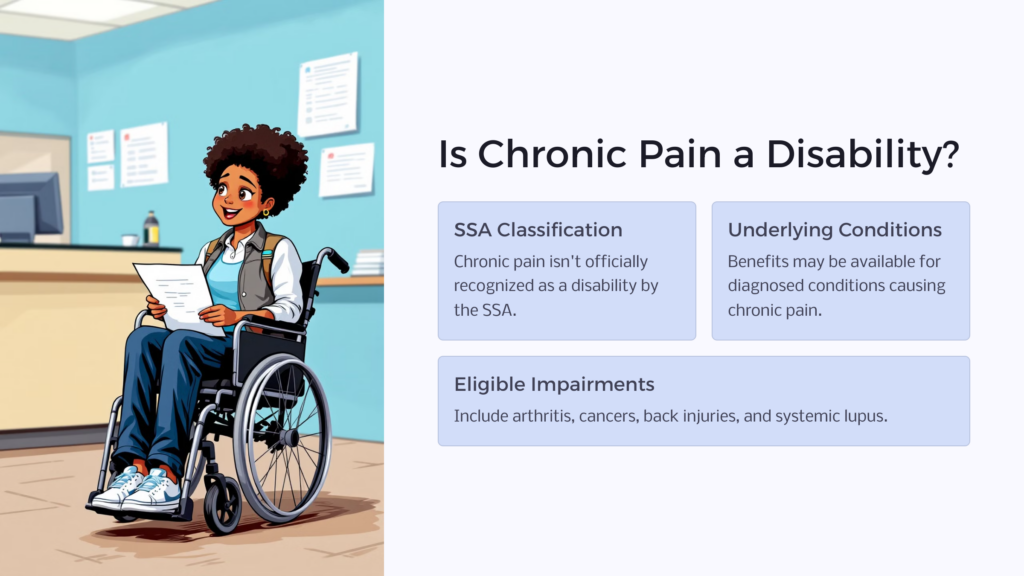
The Social Security Administration (SSA) does not approve disability benefits for ‘chronic pain’ by itself. Instead, the SSA first looks for at least one medically determinable impairment (MDI) supported by objective medical evidence.
To qualify for disability, chronic pain must prevent you from engaging in substantial gainful activity (SGA) for at least 12 consecutive months. The SSA uses the same definition of disability across all its programs, requiring that you are unable to work at any substantial gainful activity due to a medically determinable physical or mental impairment expected to last at least 12 months or result in death.
As of 2026, the SGA limit is $1,690 per month for non-blind individuals and $2,830 per month for blind individuals.
Once an MDI is established, the SSA evaluates the intensity and persistence of symptoms (including pain) and determines your residual functional capacity (RFC)—what you can still do on a sustained, full-time basis despite limitations. The evaluation process considers whether your condition meets or equals a listed impairment, and how your pain and impairments affect your ability to perform basic work activities such as sitting, standing, walking, lifting, or concentrating.
The SSA examines the functionally limiting effects of chronic pain on your ability to perform basic work activities and maintain a full time job, including whether you can perform sedentary work or light work. Greater severity of symptoms and functional limitations increases the likelihood of being found disabled. Even if you do not meet a medical listing, you may qualify if pain-related limitations prevent you from working.
Extensive medical documentation is required to support claims of chronic pain, demonstrating its impact on daily life and activities. The condition must have lasted or be expected to last for at least 12 consecutive months or result in death to be considered for benefits. Functional limitations due to chronic pain must significantly restrict the ability to perform basic work activities needed to do most jobs.
While the Social Security Administration doesn’t officially recognize chronic pain as a disability, it is seen as a symptom of another issue. To get Social Security benefits, you need to get diagnosed or show medical records indicating the disease that’s causing your pain. Some of these impairments that may make you eligible for disability benefits are:
- Inflammatory Arthritis
- Various Cancers
- Back and Spinal Injuries
- Bowel and Renal Diseases
- Systemic Lupus
Example Scenario
Ally, 45, lives with severe degenerative disc disease (an MDI) in her lumbar spine, causing chronic back and leg pain that significantly limits her function. Despite extensive treatments including physical therapy, injections, and medication, her pain prevents her from sitting or standing for more than 30 minutes at a time.
Her Residual Functional Capacity assessment determined she could not perform her past work as an administrative assistant or any other sustained full-time work, which led to her approval for Social Security Disability benefits.
Frequently Asked Questions
Can fibromyalgia qualify for Social Security Disability?
Yes, fibromyalgia can be considered a disability by the SSA if it meets specific diagnostic criteria and causes severe functional limitations, often evaluated under the RFC assessment.
What kind of medical evidence is needed to prove chronic pain for disability?
You need objective medical evidence of an underlying impairment (e.g., imaging, lab results, clinical findings) and detailed doctor’s reports describing your pain, its severity, and how it limits your daily and work-related activities.
How does the SSA evaluate the intensity of pain?
The SSA evaluates pain intensity by considering all available medical evidence, including objective findings, medical signs, laboratory results, prescribed treatments, and statements from you and your doctors about the nature, onset, frequency, duration, and effects of your pain.
What is a Residual Functional Capacity (RFC) assessment in relation to chronic pain?
An RFC assessment determines the maximum amount of work you can do despite your chronic pain and related limitations. It evaluates your ability to perform physical and mental tasks on a sustained basis.
Does mental health impact chronic pain disability claims?
Yes, mental health conditions like depression or anxiety may affect chronic pain and are considered as part of your overall impairment. They can also directly contribute to your RFC limitations if well-documented.
Are there specific chronic pain conditions that automatically qualify for disability?
No chronic pain condition automatically qualifies. Eligibility always depends on the severity of the underlying medically determinable impairment, the objective medical evidence, and how the pain impacts your ability to perform substantial gainful activity.
How long does it typically take to get a decision for chronic pain disability benefits?
The timeline for a disability decision can vary significantly, often taking several months to over a year, especially if appeals are necessary. It depends on the complexity of your case and the volume of applications.
Let Benefits.com Help You
When applying for Social Security disability benefits, you will need to submit various documents that will prove your impairment. Those who have chronic pain will be required to submit medical records showing the cause of the persistent pain, such as musculoskeletal disorders and organ diseases. If you need help securing these documents, Benefits.com can help.
Our team develops the medical evidence that you need to receive disability benefits. With our help, any veteran, at-risk communities, and underserved populations have been able to get the payments they’re legally entitled to. Contact us today to get started.
 Benefits.com Advisors
With expertise spanning local, state, and federal benefit programs, our team is dedicated to guiding individuals towards the perfect program tailored to their unique circumstances.
Rise to the top with Peak Benefits!
Join our Peak Benefits Newsletter for the latest news, resources, and offers on all things government benefits.