














Individuals suffering from chronic or debilitating back pain may be eligible for disability benefits through either the Department of Veterans Affairs (VA) or the Social Security Administration (SSA). VA benefits are available to veterans with service-connected back conditions, requiring evidence of an in-service injury or aggravation and a clear disability rating.
Conversely, Social Security Disability (SSD/SSI) is for those with a medically determinable impairment that prevents them from engaging in substantial gainful activity for at least 12 months, regardless of service. Both programs critically rely on comprehensive medical records, including diagnostic imaging, treatment history, and physician assessments detailing the pain’s severity and its specific functional limitations on daily life and work.
Why This Update
Both the VA and the SSA can change their policies and eligibility conditions. We want to make sure our content is as up-to-date as possible so that you have correct information!
What Is Disability for Back Pain?
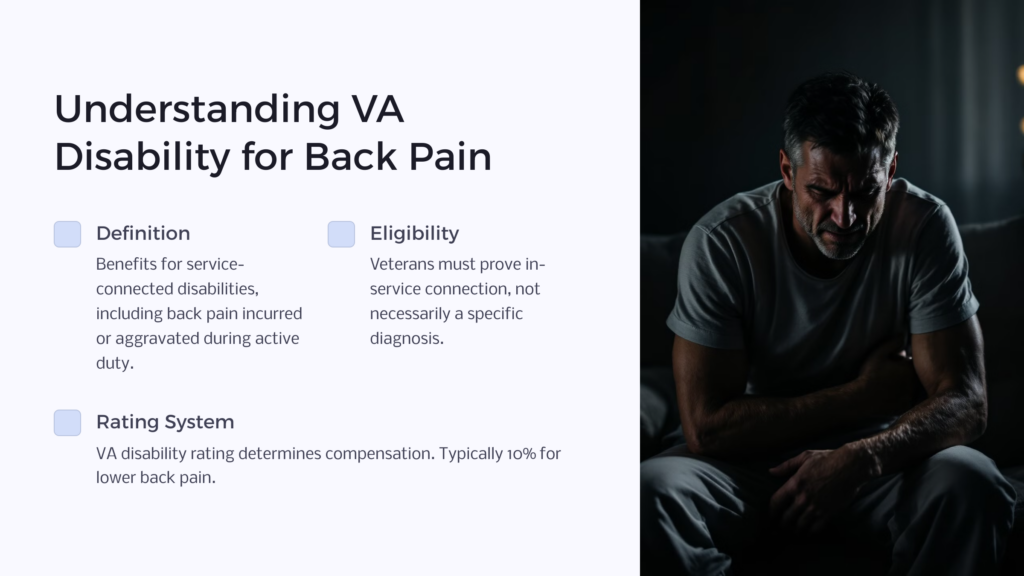
Disability for back pain is one of the many benefits you may be eligible for as a military veteran.
The Veterans Affairs office provides VA disability benefits for military service-connected disabilities. This includes any disabling health condition or disease you may have incurred or aggravated while on active duty.
Aside from the VA, the Social Services Disability program also offers disability benefits for chronic back pain, provided the individual can prove it is a medically determinable impairment with medical evidence for their disability claim.
Many people still wonder whether chronic pain counts as a disability. A veteran’s chronic pain may be considered a disability if there are functional limitations, difficulty doing regular activities, and even difficulty within employment opportunities.
The more severe the pain and its overall effects are, the higher the VA disability rating a veteran can receive — and the higher their potential disability benefit compensation. In most cases, the VA rating for lower back pain is around 10%. However, the VA rating scale is based on individual disabilities, and the base score for a common disability doesn’t mean that is their final judgement of your disability benefit need.
What Causes Chronic Back Pain?
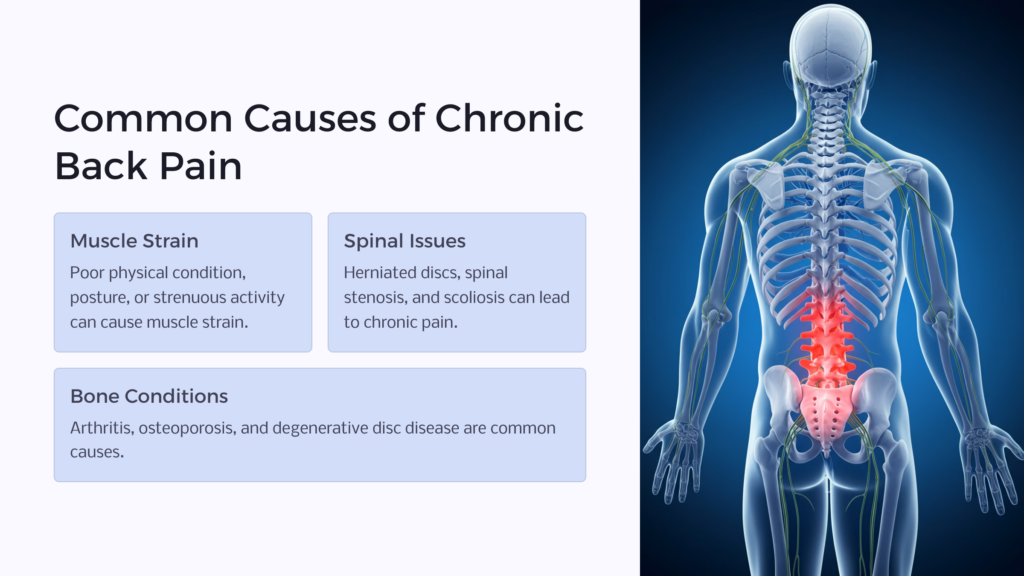
There are various potential causes of chronic back pain. Muscle or ligament strain are common causes of back pain. These can be due to poor physical condition or posture and constant strenuous activity on the back.
Other causes of chronic back pain are:
- A fall or similar injury
- Myofascial pain syndrome
- Herniated, bulging, or ruptured discs in the spine
- Spinal stenosis
- Spondylitis
- Scoliosis
- Arthritis
- Osteoporosis
- Osteoarthritis
- Spinal fusion
- Sciatica
- Nerve root compression
- Degenerative disc disease
What Are the Symptoms of Chronic Back Pain?
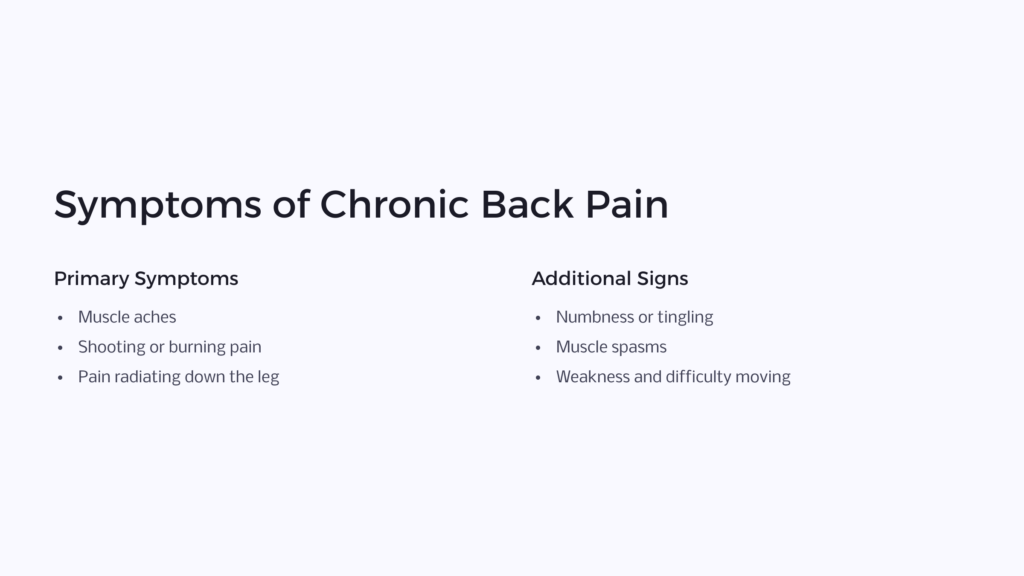
The most common signs of back pain are muscle aches. This can be a shooting, burning, stabbing sensation, or a combination. Pain that starts at the back — usually along the spine and lower back — then radiates down the leg is also a symptom of back pain.
Other symptoms of chronic or debilitating back pain can include:
- Numbness or a tingling sensation
- Muscle spasm
- Weakness
- Difficulty walking
- Difficulty moving in general
- Need for additional lumbar support
How Is Chronic Back Pain Treated?
Chronic or acute back pain is typically treated with pain medication. According to researchers, the best medications for back pain are a combination of NSAIDs and muscle relaxers. Combining NSAIDs with acetaminophen was also found to improve low back pain greatly.
Popular examples of NSAIDs are ibuprofen, such as Advil or Motrin, and naproxen, like Aleve or Naprosyn. Meanwhile, brand names of acetaminophen include Tylenol and Panadol.
Aside from pain relievers and other medications, physical therapy and chiropractic care may also help alleviate lower back pain. However, surgery may also be necessary in severe cases, depending on the underlying condition causing the chronic back pain.
How Is Chronic Back Pain Diagnosed?
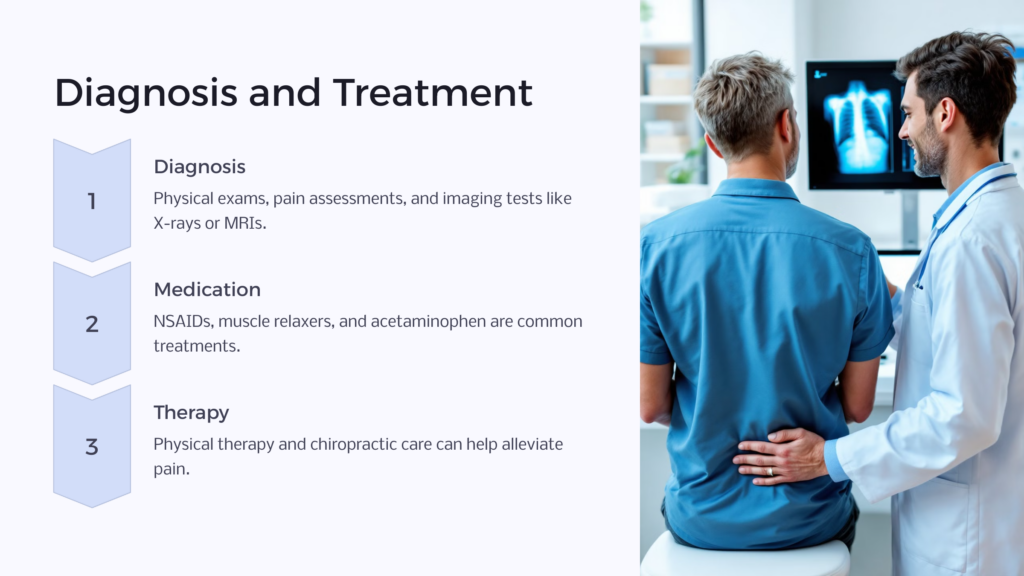
Chronic pain is generally diagnosed by assessing the individual’s ability to sit, stand, and walk. The physician may also examine your ability to lift your legs or objects. They will also physically examine patients’ backs and ask patients to rate their pain experience on a scale of zero to 10.
Digital imaging tests — like X-rays and MRI or CT scans — may also be necessary. For patients with suspected sciatica, compressed nerves, spinal stenosis, or herniated discs, nerve studies may also be ordered.
What Are the Best Exercises for Chronic Back Pain?
Exercise can help alleviate chronic back pain. Walking, swimming, and biking are all recommended activities for those with low back pain.
Low-impact aerobics are also good for chronic back pain. Stretches combined with core-strengthening exercises like Yoga poses and pilates are also very helpful in managing low back pain.
Some easy exercises you can do at home are:
- Bridges or the supine bridge
- Knee to chest stretch
- Partial crunches
- Child’s pose
- Cat camel
- Bird and dog stretches
VA Disability vs. Social Security Disability
VA disability compensation and Social Security Disability are separate programs with different legal standards.
- The VA evaluates the severity of service-connected conditions and assigns a percentage rating.
- Social Security evaluates whether impairments prevent substantial gainful activity on a full-time basis.
A veteran may qualify for one, both, or neither depending on the evidence.
Example Scenario
Mark, a 45-year-old former construction worker, developed severe degenerative disc disease after years of physically demanding labor. Despite surgeries, physical therapy, and medication, his chronic lower back pain prevents him from lifting, bending, or sitting for extended periods.
This makes Mark unable to perform his work or any other substantial gainful activity. He is now applying for Social Security Disability benefits, compiling extensive medical records to demonstrate her functional limitations.
Frequently Asked Questions
Can chronic back pain be considered a disability?
Yes, if it is severe enough to cause functional limitations that prevent you from working or performing daily activities, it can be considered a disability for both VA and Social Security purposes.
What medical evidence do I need for back pain disability?
You’ll need comprehensive diagnostic imaging (X-rays, MRI, CT scans), doctor’s notes detailing your symptoms and functional limitations, a complete treatment history (medications, therapy, surgeries), and a prognosis from your treating physician.
Is it harder to get VA disability for back pain or Social Security Disability for back pain?
Both programs have distinct and rigorous criteria. VA requires a service connection, while SSA requires a severe, long-term impairment preventing any substantial gainful activity. Neither is inherently ‘easier,’ as both demand strong, objective medical evidence.
What is the average VA rating for back pain?
There isn’t a single ‘average’ VA rating for back pain, as ratings are individualized based on the specific condition, its severity, and measured functional limitations (e.g., range of motion, nerve involvement). Ratings can range from 10% to 100%.
What types of back conditions commonly qualify for disability?
Conditions such as herniated or bulging discs, spinal stenosis, degenerative disc disease, severe arthritis of the spine, sciatica with nerve damage, and spinal injuries or deformities can qualify if they lead to significant functional impairment.
Can I receive both VA disability and Social Security Disability for back pain?
Yes, it is possible to receive both VA disability compensation and Social Security Disability benefits concurrently. They are separate programs with different eligibility criteria, and qualifying for one does not preclude you from receiving the other.
Does back surgery guarantee disability benefits?
No, surgery alone does not guarantee disability benefits. The crucial factor is how your residual symptoms and functional limitations after surgery continue to impact your ability to work and perform daily activities. You must still meet the program’s specific criteria post-surgery.
What Resources Are Available for People with Disability for Back Pain?
Stay on top of your VA disability benefits and ensure you receive your due compensation. Visit Benefits.com today to get started with a free consultation.
 Benefits.com Advisors
With expertise spanning local, state, and federal benefit programs, our team is dedicated to guiding individuals towards the perfect program tailored to their unique circumstances.
Rise to the top with Peak Benefits!
Join our Peak Benefits Newsletter for the latest news, resources, and offers on all things government benefits.